- DataMigration.AI
- Posts
- Why 83% of Cloud Migrations Blow Up - And How to Stop Yours
Why 83% of Cloud Migrations Blow Up - And How to Stop Yours
Future of data infrastructure.


Shen Pandi & Damian - Data Migration Expert
March 26, 2026
What’s in it?
83% of cloud migrations blow budgets - and your tooling is the reason, not your team
LLMs write the code in seconds. Fixing what they get wrong takes weeks
Every delayed migration is compressing your gross margin - deal by deal
Your best engineers are debugging code that should have been right the first time
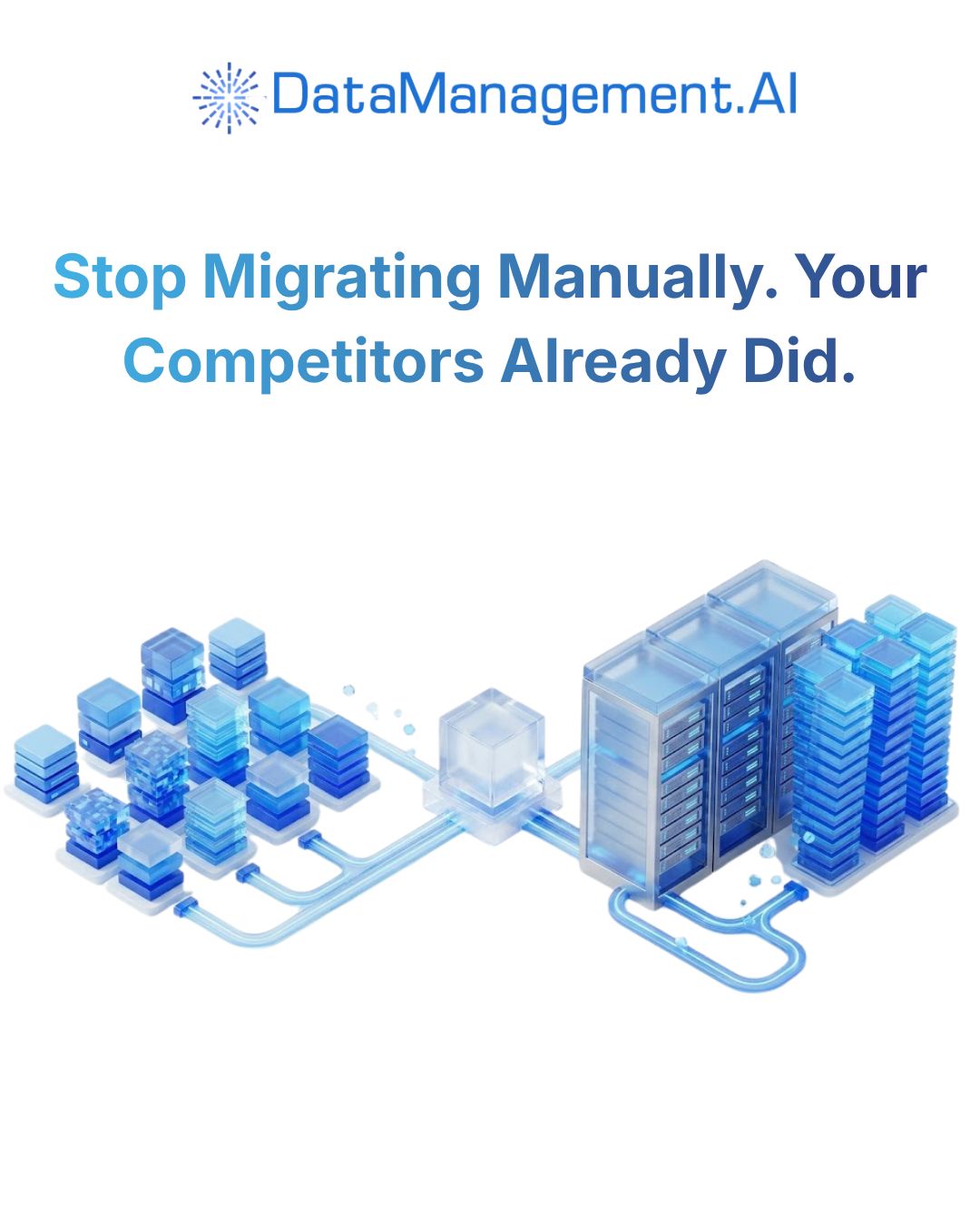
Your competitors stopped doing this manually. Here is how they did it
83% of cloud data migration projects run over budget. The reason is not your team. It is your tooling.
Picture this: your data management SaaS platform lands a mid-market enterprise client. The deal is signed. Onboarding begins. Then your engineering team opens the client's legacy ETL environment, hundreds of Informatica PowerCenter jobs, layered with years of custom SQL overrides, undocumented transformation logic, and XML mapping files the size of novels.
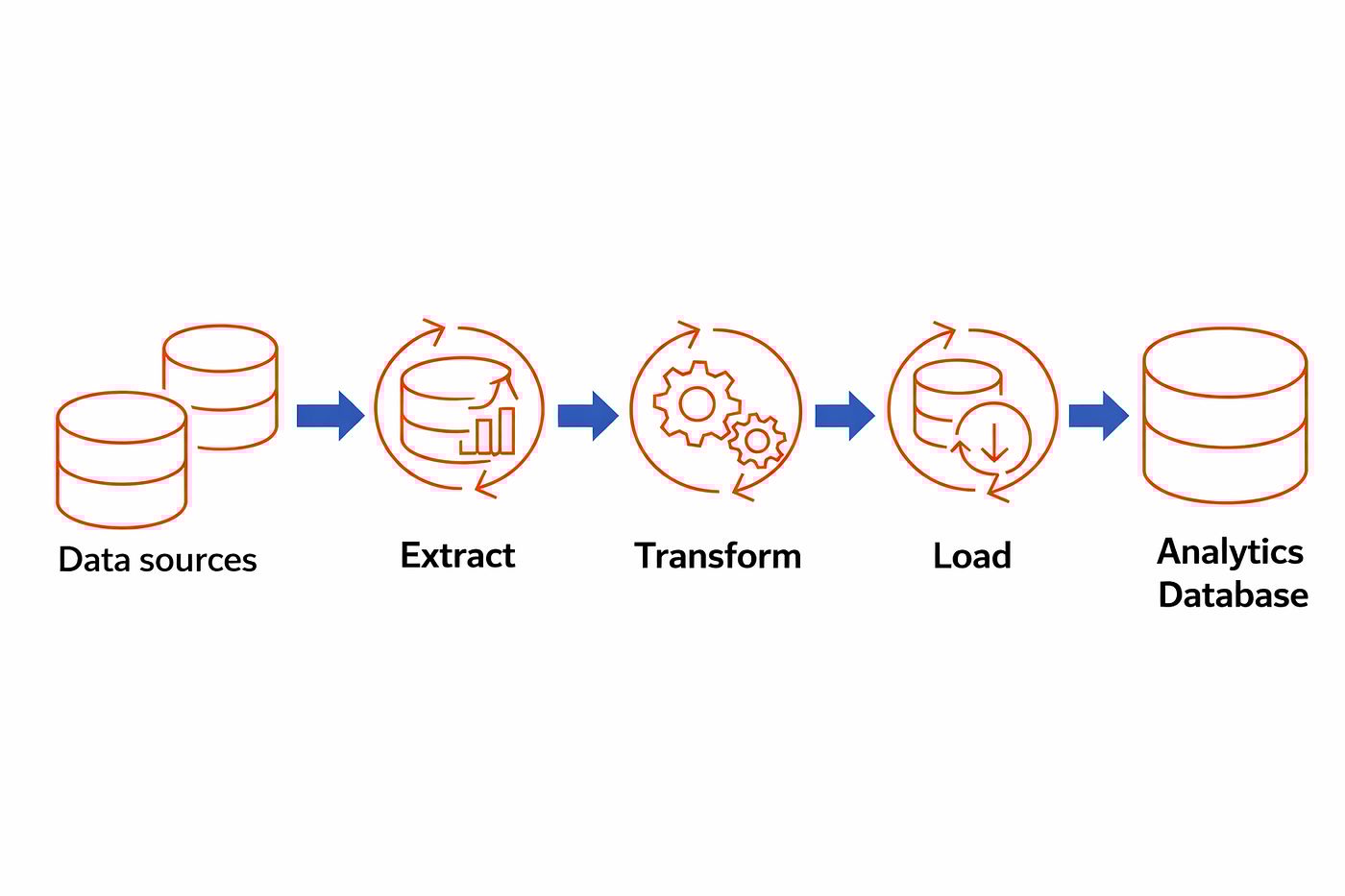
Suddenly, what looked like a 12-week migration stretches into 9 months.
Your developers are manually rewriting PySpark scripts. Your architects are untangling router transformations line by line. Your delivery timelines collapse. And the client who trusted your platform to modernise their data infrastructure begins asking uncomfortable questions.
This is not a hypothetical. It is what happens when data management and data migration SaaS companies rely on either pure manual effort or raw LLM tooling alone to drive ETL migration at scale.
You are building the future of data infrastructure for your clients. You need migration tooling that matches that ambition.
Talk to our team today and see how DataManagement.AI helps you deliver faster migrations, without the chaos.
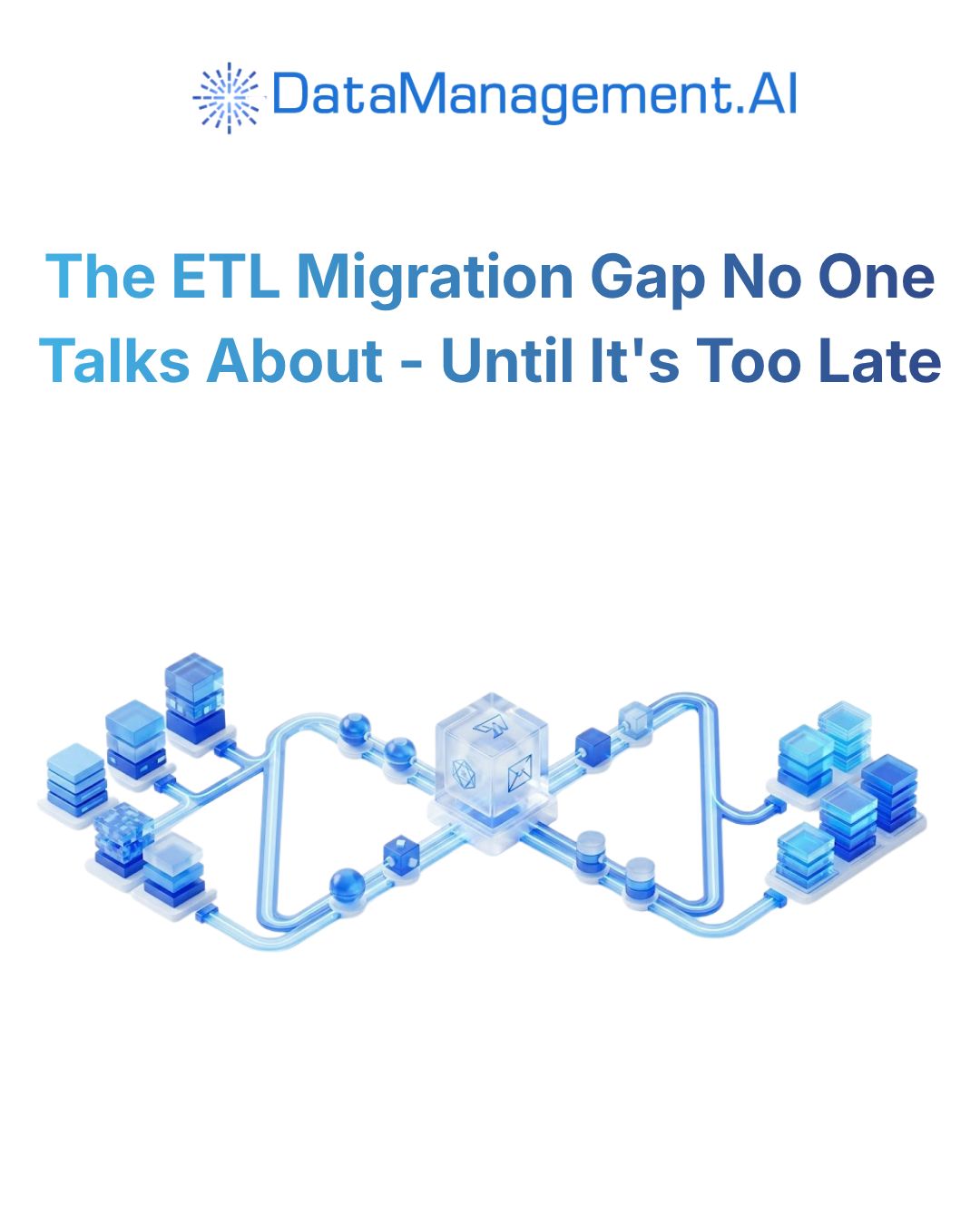
The Problem Nobody Warns You About When You Sell Cloud Migration
You know the sell. Your platform moves enterprises from legacy on-premises data stacks to modern, cloud-native architectures. You promise scalability, flexibility, and lower operational cost.
What the brochure does not cover is the ETL migration graveyard that sits between the signed contract and a working production environment.
Legacy ETL platforms like Informatica PowerCenter, IBM DataStage, and Ab Initio were built for a different era. They run on graphical, metadata-driven workflows. They use proprietary logic, custom overrides, and source qualifiers that have no clean equivalent in modern PySpark-based systems.
When your team takes an XML export from one of these tools and tries to produce working PySpark SQL, you are not doing a translation. You are doing an archaeological dig.
And the scale is the problem. A single enterprise client can arrive with thousands of ETL jobs. Each one carries its own complexity. Each one demands time, attention, and specialist knowledge that your team may not have in depth.
Why LLMs Alone Will Not Get You There
Large language models changed what felt possible in automated code migration. You can feed an LLM an XML mapping file and receive a PySpark script in seconds. That feels like a breakthrough until you run the code in production.
The failures that follow are predictable and well-documented.
LLMs hallucinate transformation logic. They misread the flow of ETL processes when mappings are complex or when the source file contains layered conditional logic. They produce incomplete code that looks syntactically correct but breaks at runtime.
Token size is a structural constraint. Large XML files from enterprise ETL environments routinely exceed what most LLM context windows can process in a single pass. Without smart chunking strategies, the model only sees part of the job and fills in the rest with guesswork.
Platform-specific logic compounds the problem further. Surrogate key generation in DataStage. Sequence generators and router transformations in Informatica. Pivot stages, parameterised workflows, and row generators all require handling that generic LLM prompting simply does not reliably produce.
You can spend weeks on prompt engineering and still be left with a mountain of manual fixes. The output from an LLM is a draft, not a deliverable.
Your clients are not paying you for drafts. They are paying for working pipelines in production.
What the Gap Between LLM Output and Production-Ready Code Actually Costs You
Let us make this concrete for your business.
Every ETL job your engineers manually debug and fix after LLM-assisted conversion is time your platform is absorbing as overhead. At scale, across dozens of client migrations running concurrently, this becomes a delivery model that does not hold.
Your senior engineers are doing work that should be automated. Your project timelines bleed. Your gross margin on migration delivery contracts compresses. And your client satisfaction scores track directly to how smoothly the migration phase goes.
There is also the knowledge transfer problem. The complexity that makes legacy ETL hard to migrate is often undocumented. It lives in the heads of engineers who built those systems years ago. When your team hits a wall on a complex transformation, there is no clean answer in the codebase.
This is where hybrid intelligence matters. Not LLMs replacing engineers. LLMs are doing the volumetric heavy lifting, with structured validation, custom logic libraries, and human expertise applied precisely where they add most value.
The data migration SaaS companies that are winning client confidence right now are the ones that have solved this operational layer. They have built or adopted tooling that closes the gap between what AI can generate and what production environments actually require.
“We stopped thinking about ETL migration as a technical problem. It is a delivery reliability problem. That reframe changed everything."
This Is the Layer Your Migration Stack Has Been Missing
You have already tried generic AI tooling. You already know it does not close the gap. What your migration stack is missing is infrastructure built for exactly this problem, legacy ETL complexity meeting modern cloud environments - designed specifically for data management and migration SaaS companies like yours.
Here is what that looks like in practice.
Intelligent chunking handles the token problem at the source. Your XML mapping files are processed through recursive chunking logic that preserves transformation flow across boundaries. The model never sees a truncated job. Context is maintained end-to-end.
Prompt engineering is built into the platform, not left to your team. Rather than requiring your engineers to iterate on prompting strategies for every new client environment, DataManagement.AI embeds migration-specific prompt structures that have been refined across real enterprise migration scenarios. You get better code from the start.
Custom code enhancement layers handle platform-specific complexity. The logic that LLMs cannot reliably resolve, such as Informatica router transformations, DataStage surrogate key generation, and sequence generators, is handled through structured Python enhancement scripts that your team can extend and maintain.
Agentic validation runs automated quality checks on every converted job. Rather than pushing LLM output straight to a human reviewer, the platform runs layered validation passes that catch runtime errors, flag logic gaps, and surface edge cases before your engineers ever open the file.
The human stays in the loop where it matters. For the genuinely complex transformations where domain expertise is irreplaceable, the platform surfaces those jobs with context rather than burying engineers in noise. Your team's time goes to problems that actually need them.
The result is a migration delivery model that scales. You move from a services-constrained bottleneck to a platform-driven workflow that lets you take on more clients, hit tighter timelines, and protect your delivery margins.
The Companies Getting Ahead Are Not Waiting for LLMs to Improve
There is a version of this story where you wait. LLMs will get better. Context windows will expand. The hallucination rate will drop. Eventually, the tooling will catch up to the problem.
That timeline is real. But it does not help you win the contract sitting on your desk today. It does not protect your delivery margin on the migration currently running behind schedule. And it does not answer the question your clients will ask next quarter when they are choosing between your platform and a competitor who already has a faster, more reliable migration layer.
The data migration SaaS market is moving from a build-and-iterate phase to a consolidation phase. The platforms that emerge with strong delivery reputations are going to capture disproportionate market share. The ones that stay in manual-effort mode are going to find it harder to compete on price or timeline.
Your differentiation is not just your cloud architecture or your analytics layer. It is your ability to onboard complex enterprise data environments reliably and at speed. That capability is what earns client trust and drives expansion revenue.
DataManagement.AI gives your platform that capability without requiring you to build the migration intelligence layer from scratch.
You Should Not Have to Choose Between Speed and Accuracy in ETL Migration
The real cost of a broken migration is not just the engineering hours. It is the client relationship. It is the reference account you cannot use. It is the renewal conversation that starts with an apology instead of a proof point.
Your platform deserves migration infrastructure that matches the quality of everything else you are building.
DataManagement.AI was built to solve exactly the problems your data migration team is dealing with right now, from token limitations and LLM hallucinations to platform-specific transformation complexity and validation overhead.
You do not have to build this yourself. You do not have to absorb the delivery risk on every new enterprise client migration. And you do not have to keep watching your best engineers manually fix code that should have been right the first time.
Your competitors are not better engineers. They just stopped doing this manually. The data migration SaaS companies winning enterprise contracts right now have one thing you can replicate today - and it takes one conversation to see exactly how DataManagement.AI integrates with your migration workflow.
Thank you for reading
DataMigration.AI & Team