- DataMigration.AI
- Posts
- Your Competitors Already Know This Cloud Migration Secret
Your Competitors Already Know This Cloud Migration Secret
The real opportunity


Shen Pandi & Damian - Data Migration Expert
March 12, 2026
What's Inside?
80% of cloud migrations fail due to fragmentation, not tools.
Your siloed data is killing AI's competitive advantage.
Agentic AI compresses 8 months into 3 weeks. Seriously.
Real-time beats perfect data warehouses, always.
Skip full consolidation. Target high-value workloads first.
Why Your Legacy Systems Are Quietly Killing Your Innovation Potential
Here's what your executive team probably won't tell you at the next board meeting. Your current cloud infrastructure isn't moving at the speed your business demands. Your teams are spinning wheels, managing data spread across siloed systems.
Regulatory constraints keep piling up, while artificial intelligence reshapes every industry around you. You're not alone in this struggle, and the cost of waiting just got exponentially higher.
The enterprise cloud migration landscape has fundamentally shifted in 2026. It's no longer about finding the cheapest path to the cloud. It's about building the agile, intelligent data foundation that transforms your organization from reactive to predictive. Let's talk about what you need to know.
The Cloud Migration Decision That Separates Winners From the Struggling
When you look at your current infrastructure, what do you see? Most enterprise teams discover they're sitting on untapped potential wrapped in complexity.
Your workloads are scattered across multiple environments. Your compliance requirements demand different approaches for different data types. Your latency-sensitive operations can't afford the round-trip delays of centralized cloud processing.
This is exactly what enterprise teams are facing in 2026, and it requires a fundamentally different approach than previous cloud migrations.
Why the Old Model Doesn't Work Anymore
Your business has outgrown the single-cloud-destination approach. Here's what's driving the shift: 94% of companies now operate some form of cloud service, but most are doing it wrong. They're treating cloud adoption like a binary choice rather than an architectural strategy.
The real opportunity lies in understanding that edge, private, and public clouds need to operate as one integrated fabric. That manufacturing control system requires real-time response at the edge.
Your compliance officer demands data residency within specific US jurisdictions. Your AI teams spin up training clusters that consume massive compute resources. Your retail checkout systems run computer vision processing that can't tolerate round-trip latency.
These aren't competing demands. They're design requirements that force you to think differently about infrastructure placement.
The Architecture Decision That Changes Everything
Your teams are probably debating platforms when they should be classifying workloads. Here's the distinction that matters: instead of asking "which cloud?", you should be asking "where should this specific workload execute, and what does it need to do?"
When you evaluate your portfolio through this lens, everything becomes clearer. Fraud detection services need responses in under 50 milliseconds. They're running at the edge. Billing platforms need consistency and security. They stay in a private cloud. Customer analytics platforms scale elastically. They thrive in the public cloud.
This workload-first thinking eliminates 80% of the arguments between your infrastructure and business teams because decisions are now based on physics and business requirements, not vendor preferences.
The Control Plane That Keeps It All Together
Here's where most migrations fail silently: enterprises build distributed environments without unified governance. That's where your real problem starts.
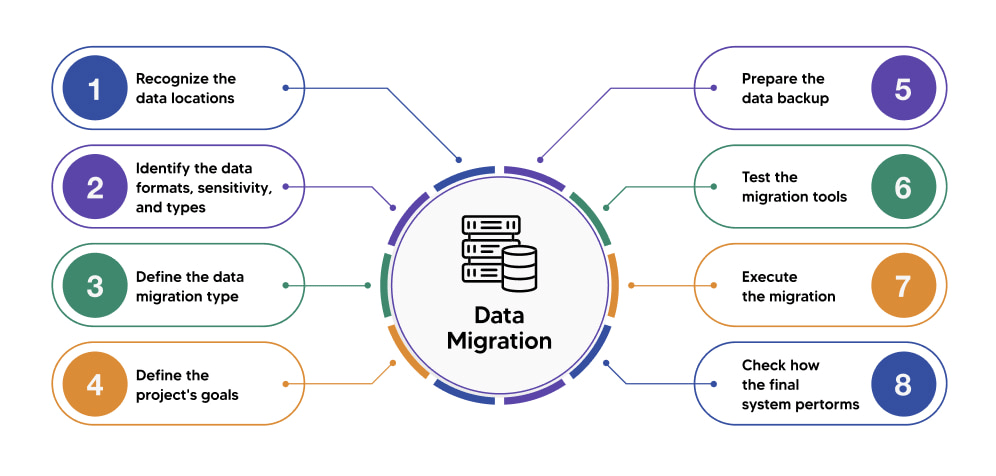
means centralized identity management, shared observability across edge, private, and public layers, and automated enforcement of compliance requirements. Without it, you're managing three different infrastructure stacks while pretending they're one.
Cost control is the metric that separates successful migrations from cautionary tales. Your CFO wants to see 20% savings. Your engineering team wants speed and flexibility. These don't have to conflict, but they require deliberate design.
FinOps baselining before you move anything is the difference between planned cloud costs and surprise bills. You need clear unit costs per workload, chargeback models per team, and real-time visibility into consumption patterns.
This is exactly the kind of intelligent data visibility that transforms the cloud from a cost center to a strategic asset.
Discover how to monitor and optimize your data migration with real-time insights that drive cost accountability.
When you have clarity on what each workload actually costs to run across different environments, your optimization decisions stop being guesses and start being strategic.
The Real Playbook Your Teams Need
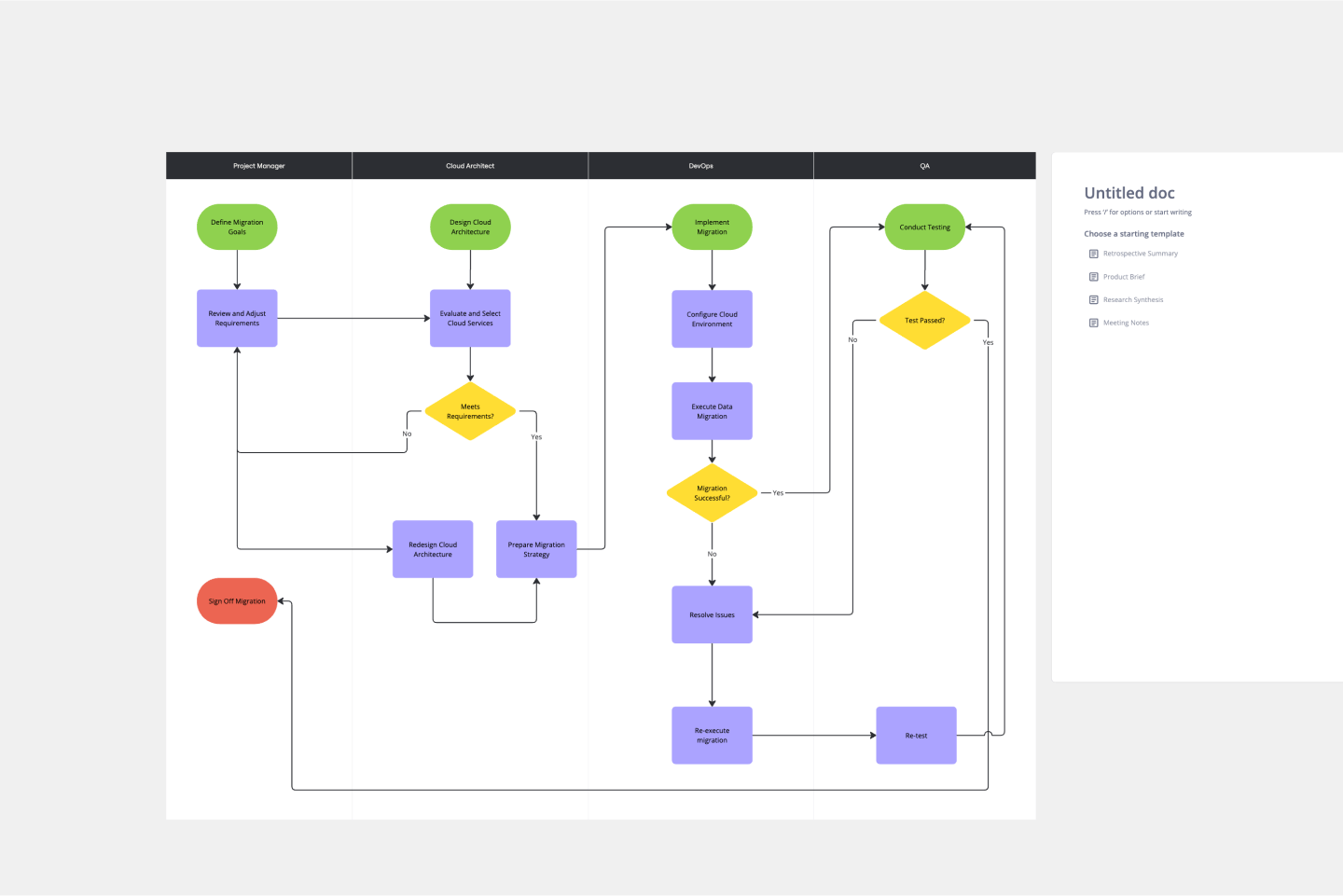
Your migration success depends on these sequential steps:
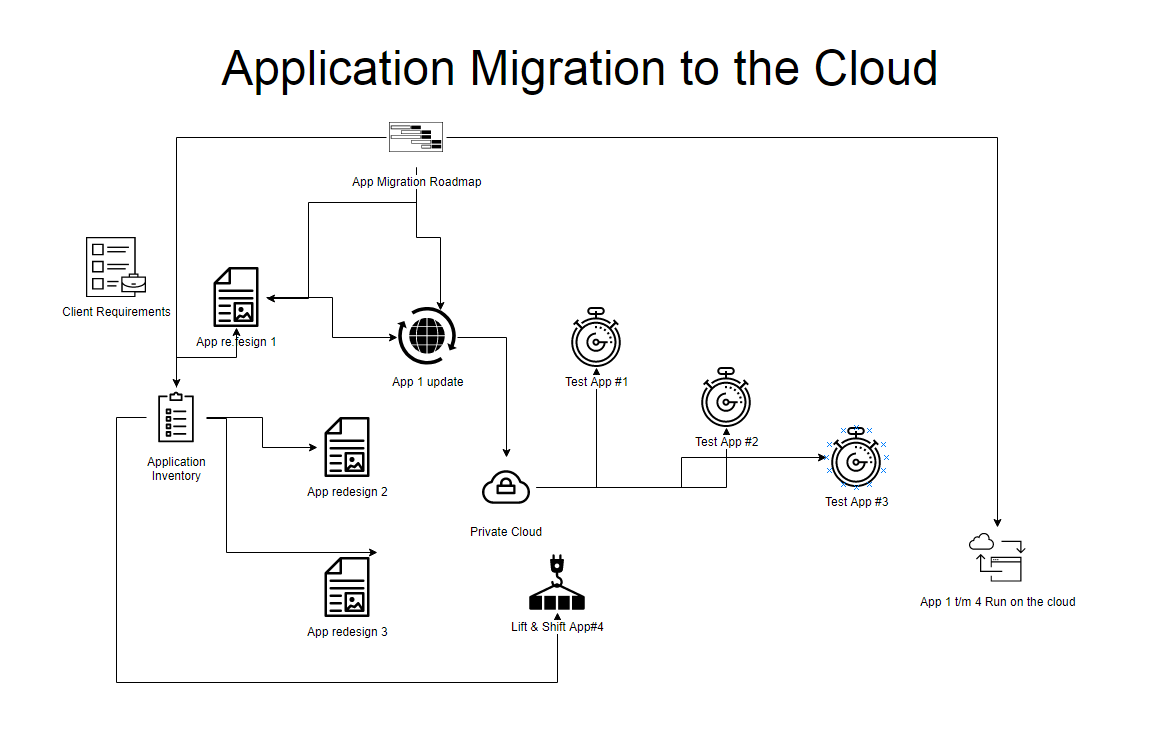
Step One: Portfolio Discovery requires a detailed inventory of your applications, data, and dependencies. Most teams skip this and pay the price later when hidden integrations break during migration.
Step Two: Landing Zone Design sets up the foundation that all workloads inherit. Network segmentation, identity controls, logging, monitoring, and policy enforcement get standardized before anything moves. This prevents rebuilding security for every application.
Step Three: The Migration Factory treats migration as production. Standardized pipelines, automated testing, reusable patterns, and central progress reporting mean you move dozens or hundreds of applications with consistent quality.
Step Four: Continuous Modernization recognizes that migration creates a starting point, not a finish line. Your cloud foundation needs to evolve as business requirements shift and new technologies emerge.
How Agentic AI Is Accelerating Migration Timelines
Your development teams spend months analyzing legacy code, planning refactors, and managing breaking changes. What if that timeline were compressed to days?
This isn't theoretical anymore. Microsoft announced agentic AI capabilities that fundamentally change how you approach application modernization. We're talking about autonomous agents that analyze your codebase, detect breaking changes, suggest safe migration paths, and apply fixes automatically.
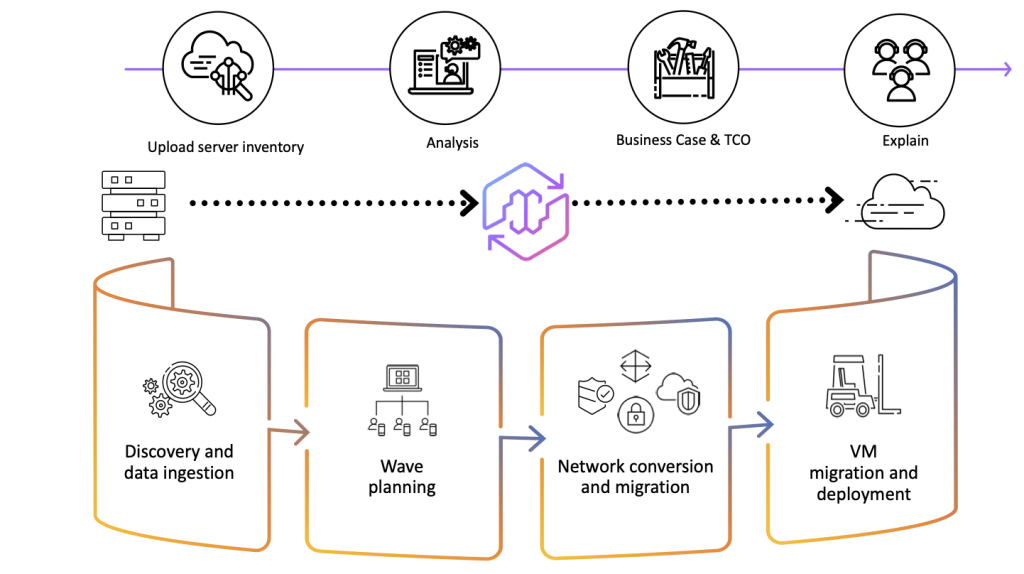
The real-world impact is striking. When Microsoft Teams needed to upgrade multiple projects to .NET 8, the process took hours instead of months. Ford China reduced middleware app modernization efforts by 70%. These aren't incremental improvements. This is a transformation at the speed of intelligent systems.
The GitHub Copilot Approach to Legacy Code
Your biggest modernization barrier is usually inertia, not technical impossibility. Developers understand the code. The issue is that manual refactoring doesn't scale. GitHub Copilot's application modernization for Java and .NET changes that calculus entirely.
The agents analyze your entire codebase, understand dependencies, identify platform-specific issues, containerize the application, generate deployment artifacts, and validate everything against security and compliance standards. Your teams review and deploy. That's the new workflow.
What takes months of manual effort now takes days of assisted work. Your developers stay focused on building what's next while AI handles the tedious refactoring work.
Connected Workflows That Keep Teams Aligned
Here's what usually breaks migrations: IT teams build infrastructure while development teams plan refactors, and they never actually talk to each other until everything's ready to move and nothing fits.
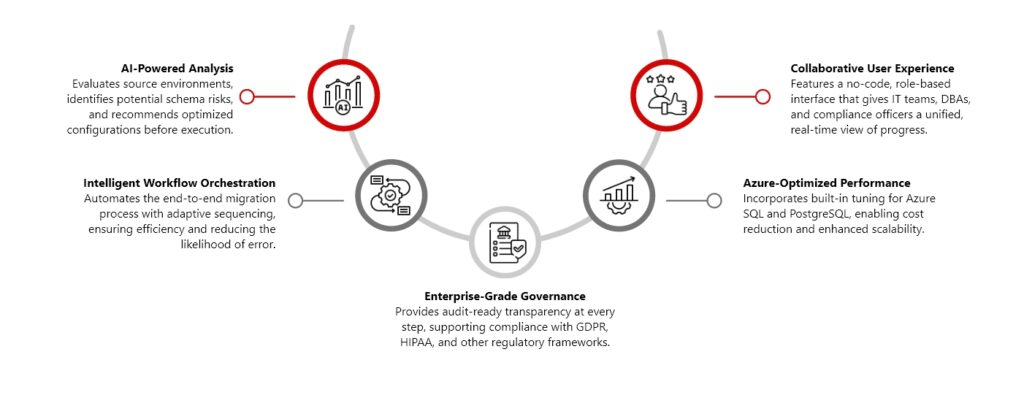
Azure Migrate solves this by creating connected workflows between infrastructure planning and application modernization. IT leaders define landing zones and compliance requirements. Development teams see those constraints and design applications to fit. Everyone's optimizing toward the same goal from day one.
The agentic capabilities in Azure Migrate do the heavy lifting on discovery. Application-awareness becomes automatic. You get visibility into dependencies, resource relationships, and data flows without manual mapping. This accelerates planning from weeks to days.
Why Your Teams Can Move Faster Without Sacrificing Quality
The constraint on most migrations isn't technical. It's organizational. You can't accelerate legacy code refactoring without breaking things. You can't parallelize discovery across dozens of teams without creating duplicate work. You can't validate every change without slowing down.
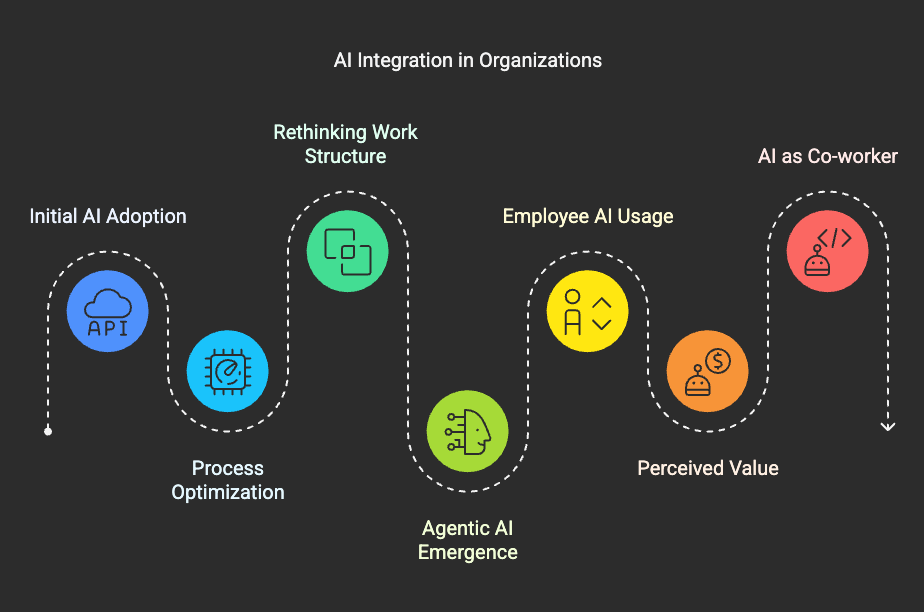
Agentic AI removes each of these constraints. Automated analysis eliminates duplicate discovery work. Agent-driven refactoring eliminates manual code review bottlenecks. Continuous validation prevents quality regression.
The result: your modernization timeline collapses. More importantly, your team experiences fewer failures and rework. That's the real value.
How Industry-Scale Data Migrations Transform Your AI Capabilities
You've probably heard that PayPal completed one of the largest data migrations in history. The scale is staggering. 300 petabytes of data consolidated from a dozen different systems. That's not just a technical accomplishment. That's architectural transformation.
The business context matters here. After 25 years of building payment infrastructure, PayPal had acquired companies, integrated services, and grown internationally. Success created complexity. Data fragmented across systems meant a customer might use PayPal for online sales and Venmo for local transactions, but PayPal couldn't provide a unified business view.
That fragmentation is more than inconvenient. It's strategically limiting. In the AI era, fragmented data is the primary barrier to creating intelligent experiences. Your fraud detection models can only learn from siloed datasets. Your personalization engines work with incomplete customer profiles. Your business intelligence reports take weeks to compile.
PayPal recognized this wasn't a technical problem. It was a business imperative. Without unified data, they couldn't compete in the AI-driven financial services landscape.
The Architecture Decision That Unlocked Innovation
PayPal faced a choice that sounds familiar if you're running enterprise operations: build the scale you need on-premises or move to cloud-native architecture. The math was clear. Building on-premises would take years and billions. Cloud architecture unlocked innovation while reducing complexity.
They chose BigQuery because it's fundamentally different from traditional data warehouses. Compute and storage scale independently. That means you pay for what you use instead of overprovisioning infrastructure. It's built for SQL at massive scale, which meant their team could adopt it quickly. Most importantly, native AI integrations mean data infrastructure and machine learning platforms work as one system, not separate silos.
What Unified Data Actually Enables
Once PayPal consolidated its data, the impact was immediate and measurable. Query performance improved 2.5x to 10x. That sounds like a technical win, but it translates to business impact: real-time personalization became possible. Insights that took weeks now appear in minutes.
For AI development, the improvement was transformational. Training data that was 16x fresher meant models captured current customer behavior instead of stale patterns. Feature engineering improved because clean, governed data was instantly accessible. Development cycles are compressed because the constraint shifted from data availability to model innovation.
Operationally, they reduced data infrastructure vendors from four to one. Eliminated data duplication between platforms. Streamlined operations while simultaneously improving data quality and accessibility.
This is the shape of modern data infrastructure: unified platforms that serve analytics, AI, and reporting from a single source of truth.
Why Your Data Accessibility Decision Matters Now
Here's what separates winners from followers in the AI era: accessible data that everyone can use versus locked-down data that only specialists understand. PayPal's migration wasn't just about consolidation. It was about breaking organizational silos so engineers, analysts, and business teams could explore data independently.
That accessibility unlocks something powerful: your entire organization starts thinking in terms of data-driven decisions because data is suddenly available to everyone with proper access controls.
The merchants PayPal serves can now receive personalized financial guidance based on their transaction patterns. Fraud prevention models can identify potential issues before they affect customers. Risk assessment becomes more intelligent because it's informed by the complete view of customer behavior.
These capabilities didn't exist before consolidation. They weren't technically impossible. They were just constrained by fragmented infrastructure.
Before you start thinking your current data foundation is "good enough," consider scheduling a strategy conversation.
Access a free consultation that analyzes your current data landscape and identifies where intelligent consolidation could unlock competitive advantage.
The Lessons That Extend Beyond PayPal's Scale
You might think PayPal's experience doesn't apply to your organization because you don't operate at their scale. Actually, the opposite is true. The lessons are more relevant to mid-market enterprises than to hyperscalers.
First: don't underestimate how under-utilized and disorganized your data probably is. Most organizations sit on valuable insights that never get extracted because data is too fragmented to analyze. Centralized, accurate, consistent data paves the way for AI experimentation and deployment at scale.
Second: ensure data accessibility with proper controls. Data orchestration paired with enterprise search capability breaks down organizational silos and accelerates decision-making. This might be the most promising application of AI inside enterprises: making information accessible to people who need it.
Third: recognize that migration timelines matter strategically. Companies spending time cleaning up their data fabric bring machine learning and generative AI applications to market faster and deploy them at greater scale.
From Strategy to Execution
The enterprises winning in 2026 aren't the ones with the biggest IT budgets. They're the ones with the clearest data strategy and the discipline to execute it. Cloud migration isn't a checkbox project anymore. It's the foundation for competitive advantage.
Your teams are ready for this. Your organization can migrate workloads across distributed cloud infrastructure. What's required is architectural clarity, governance discipline, and the willingness to treat modernization as continuous rather than complete.
The question isn't whether you should migrate. The question is how quickly you can consolidate your infrastructure, unify your data, and start building the intelligent systems that delight your customers and defend your market position.
Thank you for reading
DataMigration.AI & Team